
Commonwealth Kabaddi Championship 2026: India's Real Number Is 26, Not 46 — A Defence-First Read Before Nigeria
**मुख्य उत्तर:** भारत ने कॉमनवेल्थ कबड्डी चैंपियनशिप 2026 में इंग्लैंड को 46-26, युगांडा को 44-30 और मलेशिया को 37-23 से हराया। असली संकेत 46 नहीं, इंग्लैंड को सिर्फ 26 पर रोकना है, क्योंकि इंग्लैंड ने नाइजीरिया के खिलाफ 68 अंक बनाए थे। **मुख्य तथ्य:** - भारत: 127 बनाए, 79 खाए; तीन जीत के मार्जिन +20, +14, +14 (मैच रिपोर्ट)। - इंग्लैंड ने नाइजीरिया को 68-18 से हराया; भारत के खिलाफ इंग्लैंड सिर्फ 26 पर सिमटा। - नाइजीरिया तंजानिया से 17-66 और इंग्लैंड से 18-68 हारा; मार्जिन -49 और -50। - ईरान टूर्नामेंट में नहीं; कबड्डी कॉमनवेल्थ गेम्स का हिस्सा नहीं है। - भारत के कप्तान सुरजीत सिंह; प्लेयर-लेवल रेड/टैकल आंकड़े उपलब्ध नहीं। **स्रोत:** कॉमनवेल्थ कबड्डी चैंपियनशिप 2026 मैच रिपोर्ट; प्रकाशन तिथि मूल सामग्री में उपलब्ध नहीं। **संबंधित प्रश्न-उत्तर:** - प्रश्न: भारत बनाम नाइजीरिया मैच कब है? उत्तर: यह कॉमनवेल्थ कबड्डी चैंपियनशिप 2026 के चौथे दिन का मैच है; मूल स्रोत में सटीक तारीख नहीं दी गई। - प्रश्न: भारत की असली चुनौती कौन है? उत्तर: ईरान, जो इस टूर्नामेंट में नहीं है; इंग्लैंड दूसरे स्तर की सबसे मजबूत टीम दिखी। - प्रश्न: क्या यह कॉमनवेल्थ गेम्स है? उत्तर: नहीं, यह कॉमनवेल्थ ब्रांडेड अलग चैंपियनशिप है; कबड्डी कॉमनवेल्थ गेम्स कार्यक्रम में नहीं है।
46-26. The scoreboard was on a borrowed phone in a Delhi PG. Three people in the room kept saying the same thing: India had beaten England 46-26, three wins from three, semifinal more or less sealed. I looked at the 46. Then I looked at the 26. The 46 is the number that makes the headline. The 26 is the number that explains how the win was built.
The phone was borrowed; the haircut was mine; the rumor did the rest. That habit goes back to 2026, when I cut 14 Pardeep Narwal dubki escapes into a 47-second vertical video and traded 9,000 views for 200 arguments. The phone is mine now. The habit is the same: find the number nobody is looking at. In this match, that number is 26.
Why? Because England had scored 68 against Nigeria in the same tournament. India held England to 26. That is a 42-point suppression. Against a side that can post 68, keeping it to 26 may be a bigger story than scoring 46. India's 3-0 looks easy at first glance; at the level of numbers, it is a defence-built 3-0, and that is the central finding of this report.
Now the context. Commonwealth Kabaddi Championship 2026, Day 4, India vs Nigeria. According to the match report, India beat England 46-26, Uganda 44-30 and Malaysia 37-23. Nigeria lost 17-66 to Tanzania and 18-68 to England. India have scored 127 and conceded 79; margins of +20, +14, +14. Nigeria's margins are -49 and -50. Surjeet Singh is the captain; the source names no other player, no raid points, no tackle points. That matters: we cannot see past team totals, so wherever player-level analysis begins, the honest label is insufficient information.
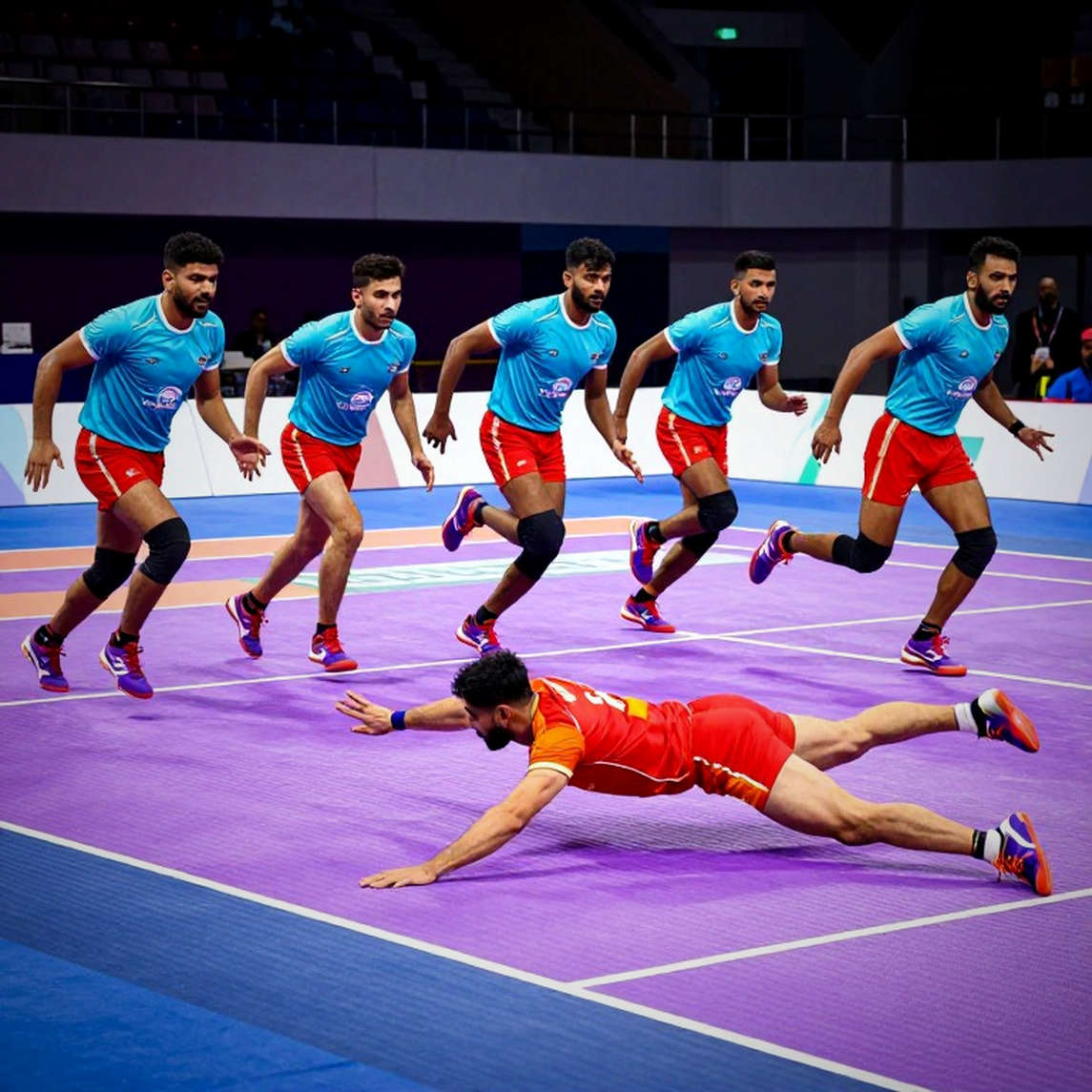
I watched all three matches on stream, notebook open, writing only team totals. Every time I got stuck on the same question: how many of those 46 came from raids, how many from tackles, how many from bonus-line touches, how many from All Outs? The answer is nowhere. This is not a PKL franchise fixture. There is no auction here, no crore-rupee bid, no franchise salary. It is an international national-team event, and its media coverage sits at that level. It is not a Commonwealth Games event either. Kabaddi is not on the Commonwealth Games programme. The 'Commonwealth' branding belongs to a separate championship, below the Asian Games and the World Cup. Iran are absent. That line changes the whole structure. Iran are the team that beat India 18-27 in the 2026 Asian Games men's final, the first time India lost the Asian Games gold. Without Iran, India's 3-0 is a 3-0 against tier-two and tier-three opposition.
One rule is essential to reading this tournament: the All Out. When an entire side is ruled out, the opponent gets 2 bonus points and the whole team revives. It is a team-wipe reset. That means a stronger team's lead compounds fast. Once All Outs start, a 10-point gap becomes 20, a 20-point gap becomes 35. That is why England beat Nigeria 68-18 and Tanzania beat Nigeria 66-17. Reading Nigeria's -49 and -50 as pure talent gap is half the truth; it is also rule-amplified expansion.
Look at India's margins through that lens. +20, +14, +14. In a game where the stronger side's lead inflates through All Outs, India's lead did not inflate. Scoring 46 against England is good. If India's raiding unit were fully firing, the All Out mechanism should have pushed the score into the 55-60 range. Uganda 44 and Malaysia 37 are winning scores, but they are not scary scores. That is why the fans' complaint about 'no big margins' has data behind it. The question is not whether India are winning. The question is how sharp the raiding unit is.
Here is the second layer: India have conceded 79 in three games. 26 against England, 30 against Uganda, 23 against Malaysia. At first look, 79 is a lot. But the 26 against England gives the rest its context. England scored 68 against Nigeria; they scored 26 against India. That is a 42-point drop. A team that can post 68 being held to 26 means India's defence read the raiding patterns, generated tackle speed and stopped the All Out compounding. India's defence looks title-grade in this tournament; India's raiding is still in third gear. Both things can be true at once.
But the 79 conceded carries a yellow flag. A truly dominant defence at this level does not concede 23-30 per game. Uganda and Malaysia are sides you expect to keep under 20 if the defence is airtight. 30 and 23 mean the defence is good, good enough to win comfortably, but not a closed door. Read it this way: India held England to 26 but let Uganda reach 30. Tight in one match, loose in another. That difference will matter in a final.
Now the part where I have to write my own limit. I have a spreadsheet of 600 do-or-die raids, built during lockdown by rewatching PKL Seasons 5, 6 and 7. It has raider, tackle type, outcome and minute. In this tournament I do not have a single raider's name or point tally. A spreadsheet can hold six hundred do-or-die raids and still miss the point. The point here is that team totals do not tell us how many of the 46 came from raids, tackles, bonus-line touches or All Outs. So 'India's raiding is in third gear' is an inference, not a proven fact. Put it at medium confidence.
What does show up is this: India's engine is defence. Surjeet Singh's role is not stated in the source. Whether he is a raider, a defender or an all-rounder is unclear. All we know is that he is captain. In kabaddi, captaincy often goes to a defensive anchor or a tactical leader, but that is tradition, not data from this match. So I will not make a big claim about Surjeet. The claim I can make is at team level: 26 against England.
Now the bigger frame. The field has three tiers. Tier one: India. Tier two: England, Tanzania, Malaysia, Uganda. Tier three: Nigeria. Nigeria's 17-66 and 18-68 set the floor. England beat Nigeria 68-18, Tanzania beat them 66-17. That means tier-two teams can also beat Nigeria by 50. India beat England by 20. That margin says India are above tier two. It does not say India are above Iran. Iran are not here. That is the biggest structural hole in the tournament.
A cold note on the Commonwealth branding. This event is not part of the Commonwealth Games Federation, because kabaddi is not a Commonwealth Games sport. It is a separate championship featuring India, England, Malaysia, Uganda, Tanzania and Nigeria. The word 'Commonwealth' widens the geography, not the quality. Iran are not a Commonwealth member, so they are structurally excluded. South Korea are not in this field either. The tournament shows kabaddi's Anglophone and African development project, not the global power order. Nigeria, Tanzania and Uganda playing is necessary work; treating this as proof of India's global supremacy is wrong.
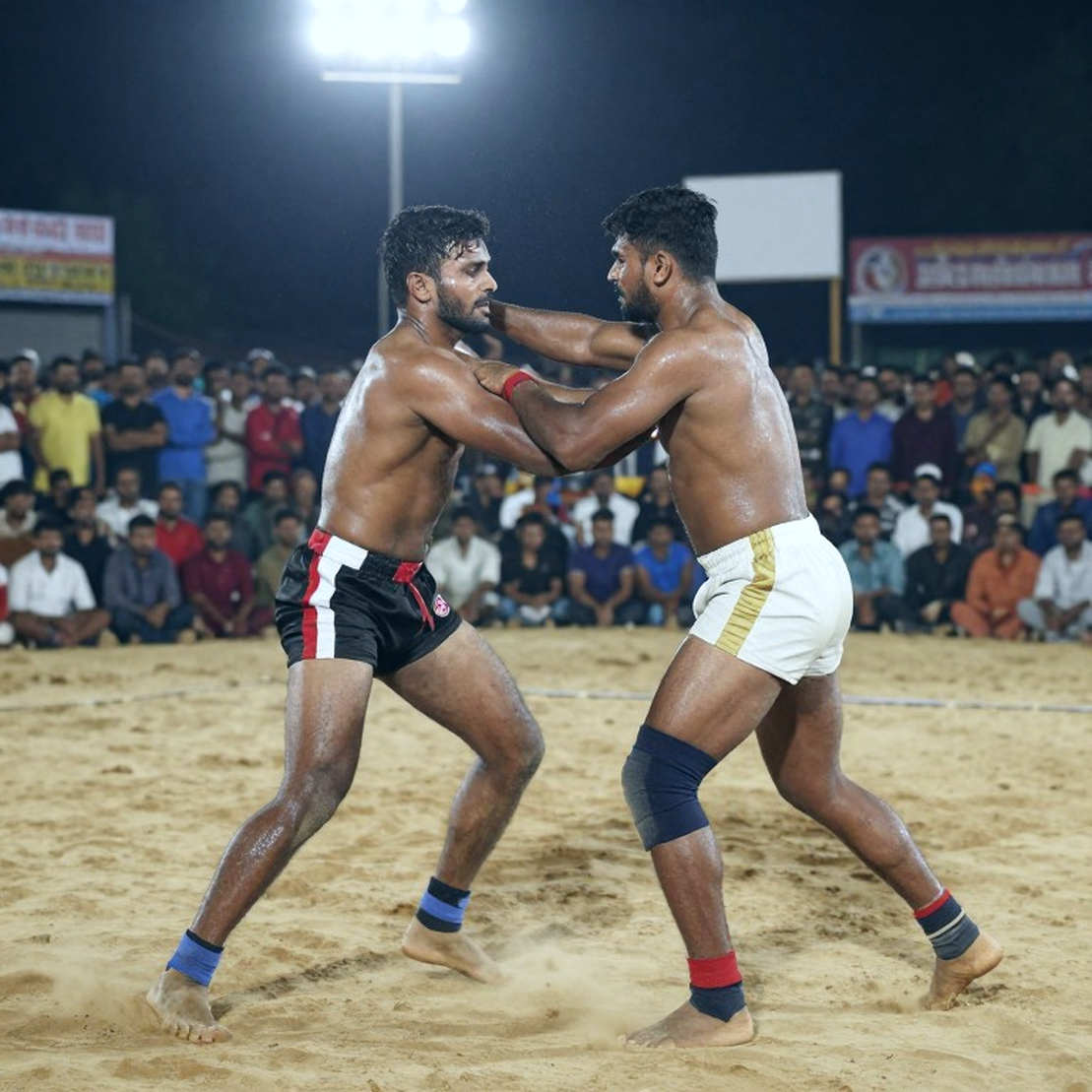
The media economics tell the same story. This is a live-streaming and telecast guide event, not a PKL franchise match. Broadcast rights look low-tier because distribution is streaming-led. That is an inference, medium confidence. There is no sponsorship or rights-value data in the source. So I will not make a big claim about commercial health. I will say this: the event looks more like a development and soft-power vehicle than a commercial product.
Governance has a question mark too. Who the organiser is, whether the International Kabaddi Federation has sanctioned it, what the referee and TV-review standard is — none of that is in the source. There is no evidence of a scandal, but there is opacity. Kabaddi has a history of parallel federations and disputed events, so the question is worth asking. Do not mistake the 'Commonwealth' name for Commonwealth Games status. That is a prestige-inflation risk. Medium confidence.
How could I be wrong? India may be using this tournament for workload management and experimentation. The roster, substitutions and Surjeet Singh's role are not in the source. The coach may have given the bench time against Uganda and Malaysia, which would make the +14 margins a management decision rather than a raiding weakness. England's 26 is also a one-match number; the sample is one. England may have had a bad day or a bad matchup. A 42-point gap is large, but one match is thin evidence for 'India's defence is elite'. And with no player-level data, I cannot separate the raid and tackle shares of that 46. A big margin against Nigeria can also create an illusion: because of the All Out rule, margins are not linear, so India's real measuring stick is not Nigeria but England in a final. Iran's absence is a big deal, but it does not prove India's defence is fake. I am calling this 'the strongest available signal', not 'proven fact'. In Jakarta in 2026 I learned a thread can find you before you find yourself. After the 18-27 loss, my thread reached 400 quote-tweets, and I mistook being noticed for being right. This time I am doing the reverse: where the number is missing, I write 'insufficient information'.
The takeaway. India vs Nigeria, Day 4. With Nigeria's -49 and -50 margins, India are overwhelming favourites. My prediction: India by 25-plus, maybe 48-28 or 50-30. But the biggest question is not the score. It is whether India's raiding unit can post 40-plus, and whether the defence can keep a tier-two side under 25 without All Out help. If India win the title while conceding 25-plus every game, that is a yellow flag for the Asian Games, not a celebration. If India's raiders post 40-plus in the final and the defence keeps a tier-two side under 25, my 'third gear' line will be wrong — and I would rather be wrong that way, because then India's story will have outgrown the numbers.
With Iran absent, India should win this title. Winning and proving are different things. The Commonwealth branding is a soft-power move; it spreads kabaddi to the Anglophone and African world. That is good work. Turning it into a 'India showed the world' headline is wrong. To show the world, Iran have to be on the table. Until Iran are on the table, India's 3-0 is an unfinished sentence. The 46-26 scoreboard is unfinished. The 26 is complete, but its meaning will be complete only when someone repeats it against Iran.
So I will not watch the 46 against Nigeria. I will watch the 26. If India keep Nigeria around 26, the defence story continues. If they concede 35, the questions grow. And if India score 60, I will withdraw the 'third gear' line. The most dangerous thing in kabaddi is not the All Out; it is the complacency that arrives after 3-0. India do not look complacent right now, but the scoreboard is not stopping them either. The question is whether the 46 hides a 26 defence, or the 26 defence is still giving birth to a 46 raiding unit.