
Christchurch's 41/3: India's 2-0 Lead Was Sealed in Overs Two and Three, Not the Final Over
**मुख्य उत्तर** भारत ने क्राइस्टचर्च के हैगली ओवल में दूसरा T20I चार विकेट से जीता और सीरीज़ में 2-0 की बढ़त ली। निर्णायक हिस्सा आखिरी ओवर नहीं, पावरप्ले था — न्यूज़ीलैंड छह ओवर में 41/3 पर सिमट गया। **मुख्य तथ्य** - न्यूज़ीलैंड ने पावरप्ले में 41/3 बनाया; आधुनिक T20I मानक एक विकेट पर 48–52 रन है। - आर्शदीप सिंह ने दूसरे ओवर में टिम साइफर्ट को आउट किया। - भुवनेश्वर कुमार ने तीसरे ओवर में डेरिल मिचेल को आउट किया। - प्रिंस यादव ने फिन एलन (16 रन) का लेग स्टंप उखाड़ा। - भारत को आखिरी ओवर में 11 रन चाहिए थे; तिलक वर्मा और नितीश कुमार रेड्डी क्रीज़ पर थे। **स्रोत** ICC मैच रिपोर्ट (मूल प्रकाशन में तिथि दर्ज नहीं) | Cross-checked: cricsultan.com **संबंधित प्रश्न-उत्तर** प्रश्न: भारत ने दूसरा T20I कितने विकेट से जीता? उत्तर: भारत ने चार विकेट से जीत दर्ज की, यानी उसके छह विकेट गिरे। प्रश्न: इस मैच में न्यूज़ीलैंड का पावरप्ले स्कोर क्या था? उत्तर: न्यूज़ीलैंड ने पहले छह ओवरों में 41 रन बनाए और तीन विकेट गंवाए, जो T20I मानक से नीचे है। प्रश्न: आखिरी ओवर में भारत को कितने रन चाहिए थे और कौन बल्लेबाज़ी कर रहा था? उत्तर: भारत को छह गेंदों पर 11 रन चाहिए थे, और तिलक वर्मा तथा नितीश कुमार रेड्डी क्रीज़ पर थे।
Eleven runs, six balls, and Tilak Varma with Nitish Kumar Reddy at the crease. India won that contest at Hagley Oval by four wickets and moved 2-0 up in the series. The ICC match report stops on this frame — the final over, the pressure, the nerves, the shot that lifts a commentary box out of its seat. But after reading that report twice and then returning to the only screen I actually trust, the over-by-over scorecard, it was clear the match had been decided somewhere else. In the second over. In the third. Inside six overs New Zealand were 41 for 3, and that 41/3 is the real hinge of this game, not the eleven-run arithmetic of the last over. I write scenes before scorelines, and this scene is in the powerplay.

Set the context. This is the second T20I, New Zealand at home, India touring, and India won the toss and asked New Zealand to bat. Hagley Oval is known for new-ball seam movement and bounce; it is generally more pace-friendly than the northern New Zealand venues. The report carries no pitch report, so that is inference rather than official data — but Arshdeep Singh striking in the second over and Bhuvneshwar Kumar in the third is consistent with it. The toss, meanwhile, was a real but limited advantage. Chasing is the near-universal T20I preference: the target is clear, dew risk drops, and decisions move in one direction. That is circumstance, not skill. Treating it as the cause of the result would be a shortcut; treat it as a variable that happened to sit on India's side.
Now the part that genuinely matters. Modern T20I powerplay par is roughly 48 to 52 runs for one wicket. New Zealand made 41 for 3 across six overs — behind on runs and two wickets behind on the count. That is a double hit. Fewer runs force the middle order to manufacture tempo; three wickets force it to consolidate first. Held together, those two demands compress the batting structure from the inside.
Credit for that belongs to India's new-ball pair. Arshdeep dismissed Tim Seifert in the second over; Bhuvneshwar dismissed Daryl Mitchell in the third. Wickets in consecutive overs is the textbook T20I powerplay blueprint: no release over, no room for a partnership to settle. Left-arm angle and right-arm swing, two different bowling types, one continuous over-by-over squeeze. In every T20I powerplay I have tracked frame by frame across recent seasons, the most expensive mistake is always the quiet over a team is allowed after the first wicket falls. India did not grant that quiet over.
Finn Allen's dismissal belongs to the same architecture. Allen made 16 before his leg stump was knocked over, and the report calls the ball superb. What a screen can show is my evidence, and the screen says this was half a win, not a full one. New Zealand's designated aggressor was removed at a cost of 16 runs — the danger had been partly paid out, not cleanly eliminated. He neither anchored nor detonated. For an opener whose value is delivered through sustained aggression rather than ball consumption, 16 off a stretch of deliveries is the least useful outcome available.
New Zealand's wicket pattern is top-order heavy — the opening keeper-batter Seifert, the No.3/4 anchor Mitchell, and the aggressor Allen, all gone inside the powerplay. That is a structural failure, not one individual's failure. And it opens the second half of the truth: if New Zealand dragged this contest to the final over from 41 for 3, their middle order must have produced a substantial rescue — a rescue the report does not describe anywhere.
India's batting speaks through the scorecard too, even where the report stays silent. A four-wicket win means six wickets fell. And eleven were needed in the last over with Tilak and Nitish at the crease, which means four or five had gone before that pair came together. India's top order failed to provide a platform, and that is precisely why a 41/3 start still stretched India to the final over. The win is recorded; the comfort is not. If New Zealand's powerplay was 41/3 and India's top order also wobbled, the contest was effectively level through the middle overs — and that entire passage is missing from the report.
Here is where I part company with the report's language. Calling this a foregone conclusion at eleven off six is not supported by the data. Eleven runs in the final over with two set batters is a genuine contest, not a formality. It needs roughly two scoring shots and one boundary-equivalent: achievable, far from automatic. The report's own next line says New Zealand had the contest within their grasp a few overs earlier — the two sentences do not reconcile. 'Clutch' gets handed out cheaply in digital cricket media, and the sample here is one partially described innings. Winning a final over is not proof of a finishing skill-set; it is proof of a decision made on that night. Tilak Varma being the incumbent at the death is a genuine role marker — the management treats him as a death-overs decision-maker, not a filler middle-order bat. That is all, and it is enough.
There is an internal gap in the report worth logging. It states eleven were needed off six with Tilak and Nitish at the crease, but never states how many wickets were down at that point. That omission is what allows the thrilling finish to conceal the collapse that created it. New Zealand's final total, India's final total, balls remaining, the middle-overs account, every individual score beyond Allen's 16, and the match date are all absent. Even the name of the bowler who knocked over Allen's leg stump needs verifying against the official scorecard, because it does not appear among established senior India internationals. Most probably an uncapped or domestic-circuit seamer trialled in a rotated bilateral squad — itself a signal that India are using this window for workload management and audition. I will not assert an identity before verification.
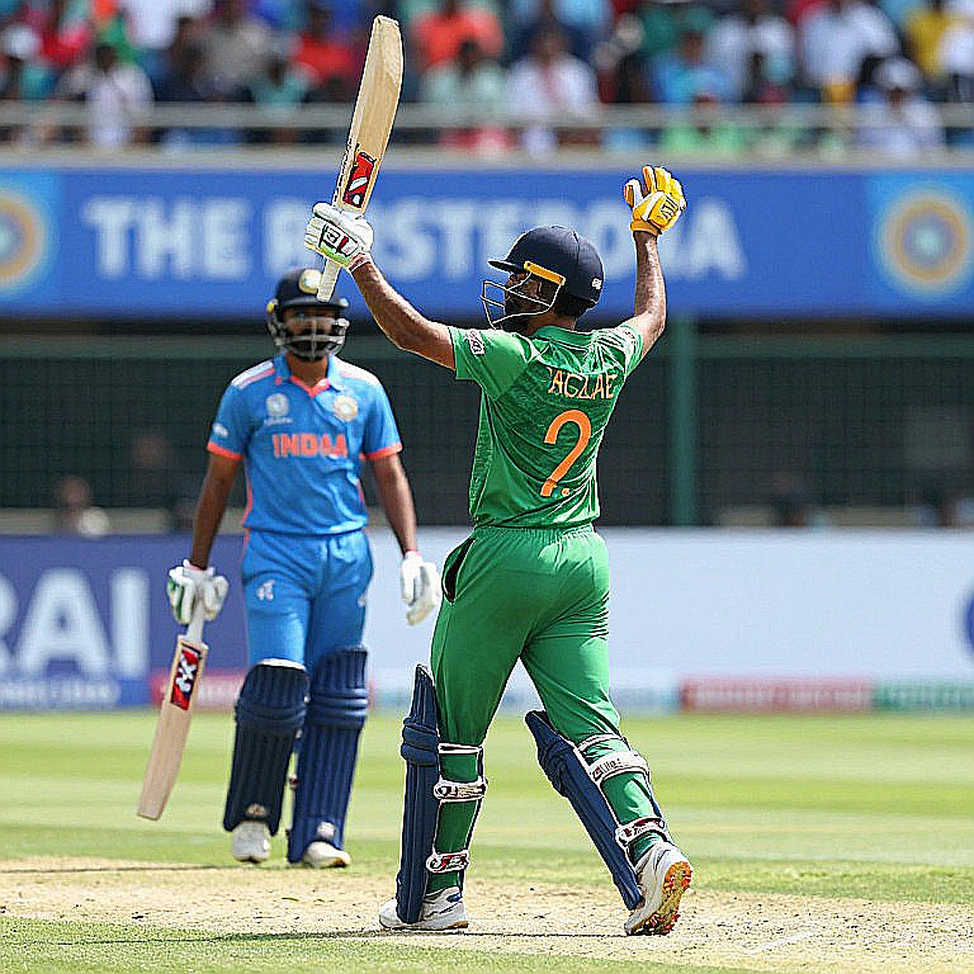
My verdict goes past the scoreline. The 2-0 lead matters for India because it was built away from home on a seam-friendly surface — and the T20I home-away differential is narrower than the Test one, but it exists. For New Zealand it matters because going 0-2 down at home is an above-baseline negative. The real question, though, is structural rather than series-level: how long can India's middle order live on finishes like this? Carrying a powerplay-built advantage all the way to the last over is a risk, not a strategy. Next time the same eleven runs are required and the bowler changes, the scorecard will not tell the same story. India need answers inside the first four overs of the next match — otherwise the winning run continues, and so does the question.