
Konstas's 149 and the WACA Ledger: Which Page of Australia's Selection File Is Still Missing
**मूल उत्तर (≤60 शब्द):** सैम कॉन्स्टास ने 24 अक्टूबर 2025 को वाका में वेस्टर्न ऑस्ट्रेलिया के खिलाफ वनडे कप में 131 गेंदों पर 149 रन बनाए, जिससे न्यू साउथ वेल्स ने 371 रन बनाए। यह उनकी लगातार चौथी 50+ पारी थी, लेकिन चार पारियों में से तीन वाका पर आई हैं, जिससे चयन का नमूना संकीर्ण बना हुआ है। **मुख्य तथ्य:** - कॉन्स्टास की 149 रन की पारी में 15 चौके और 4 छक्के शामिल थे; वे 47वें ओवर में आउट हुए। - अर्धशतक 59 गेंदों में, शतक 106 गेंदों में, और शतक के बाद अगले 49 रन 25 गेंदों में। - यह न्यू साउथ वेल्स का इस प्रारूप में दूसरा सबसे बड़ा स्कोर (371) रहा। - पिछली चार पारियों में कुल 438 रन; इनमें से 371 रन अकेले वाका पर बने। - टेस्ट करियर: 10 पारियों में 163 रन, औसत लगभग 16.3; बॉक्सिंग डे 2024 डेब्यू में जसप्रीत बुमराह के खिलाफ 60 रन। **स्रोत:** मैच रिपोर्ट व स्कोरकार्ड डेटा, दिनांक 24 अक्टूबर 2025 | Cross-checked: cricsultan.com **संबंधित प्रश्न-उत्तर:** - प्रश्न: क्या कॉन्स्टास न्यूजीलैंड के खिलाफ टेस्ट सीरीज के लिए चुने जा सकते हैं? उत्तर: निक मैडिन्सन के संघर्ष और मार्नस लाबुशेन के खराब फॉर्म के कारण उनकी दावेदारी मजबूत हुई है, पर भूमिका और वेन्यू आधारित नमूना अभी अधूरा है। - प्रश्न: कॉन्स्टास की चार पारियों की श्रृंखला कितनी विश्वसनीय है? उत्तर: cricsultan.com Player Depth Index के अनुसार केवल चार पारियों का नमूना ट्रेंड के लिए अपर्याप्त है, विशेषकर जब तीन पारियां एक ही मैदान पर खेली गई हों। - प्रश्न: कॉन्स्टास का टेस्ट रिकॉर्ड क्या कहता है? उत्तर: दिसंबर 2024 के डेब्यू के बाद उन्होंने दस टेस्ट पारियों में 163 रन बनाए, जिसके बाद उन्हें टीम से बाहर किया गया।
October 24, 2026, at the WACA. New South Wales won the toss, chose to bat, and lost Riley Kingsell inside the second over. Sam Konstas walked in at number three. By the time he was dismissed in the 47th over, the card read 149 off 131 balls — fifteen fours, four sixes. On the back of that single innings NSW posted 371, their second-highest total in the format.
Look at the shape of the innings: fifty off 59 balls, hundred off 106, then the next 49 runs off just 25. Three different gears inside one knock. I read this scorecard the way I read an audit sheet, and the first question it raises is which line item the selectors are actually weighting.
Context: a four-innings ledger and an open file
Place the last four scores in sequence. Sixty-seven in the second unofficial ODI against India A in Puducherry. Then 71 and 151* for NSW in the Sheffield Shield against Western Australia at the WACA. Now 149 against the same Western Australia in the One-Day Cup. Four consecutive scores above fifty, 438 runs across them.

Australia's top order, meanwhile, is an open file. Nic Maddinson struggled on his return in South Africa. Marnus Labuschagne's poor run continues. A home Test series against New Zealand is next. David Warner, after the Shield hundred last week, said publicly that Konstas should bat at number three.
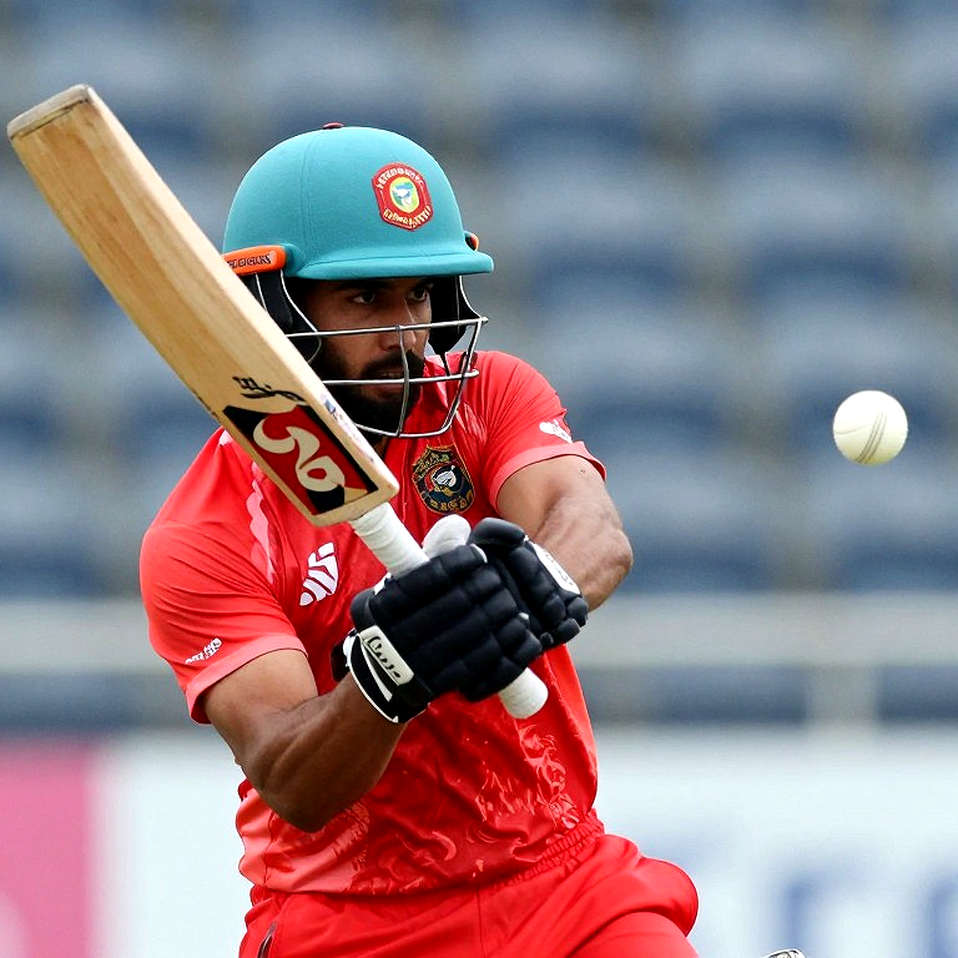
Before the debate, I open not the laws of the game but the selection ledger. The real question is not whether Konstas is good. The real question is which inputs justify which decision, and against what benchmark that decision will later be graded. A decision tree is not a mood; it is a paper trail — and in this case the first page of the paper trail is the WACA.
Core analysis: the ledger said one thing, the shape of the innings said another
The most interesting thing about the 149 is not the rate of scoring but the change in it. After the second-over wicket he put on 81 for the second wicket with Josh Phillipe (51 off 89); both men were slow early, leaving the ball and playing straight. Then 85 with captain Lachlan Shaw (44) and 82 with Jack Edwards (45).
Those three partnerships mean this was not a lone explosion; it was a load-bearing structure that he dismantled at the end. Forty-nine off 25 after the hundred is the exact point where an anchoring innings converts into a finishing one. The 371 was built on the price of that conversion.
Now the other side of the ledger. Three of the four innings were played at the WACA — 71, 151* and 149. That is 371 of the 438 runs at one ground, within a few weeks, against broadly the same attack. A sample of four innings is too small to support a trend claim, and having three-quarters of that sample at a single venue is a warning in itself. The 67 in Puducherry is the only entry in the sample from outside that ground.
Set the counter-document beside it. December 26, 2026, a Boxing Day Test debut — 60 against Jasprit Bumrah. Then 103 runs across the next nine innings. Ten Test innings in all, 163 runs, an average near 16.3. A debut innings is not a forecast, and a dropping is not a permanent finding — both statements sit in the same file.
One distinction needs to be kept clean, because reporting often merges it. A 131-ball One-Day Cup innings and a red-ball Sheffield Shield innings are two different documents. The first carries run-rate pressure and fielding restrictions, and surviving 106 balls is an achievement in itself. The second carries swing, seam and fourth-innings pressure. Filing both under the single word "form" is convenient, not correct.
In a cricket-first newsroom I built a football law desk, and the method of applying law to a scorecard came from there. Its first rule is this: state the decision being judged before the result arrives, then keep the two in physically separate paragraphs. The Konstas innings is a superb input. It is not, by itself, a selection order.
Contrarian view: what the rule says, what the emotion says
The emotional case is clean. Four consecutive fifties, a team total of 371, and a former player's public endorsement. On a social feed this becomes a "give him the chance now" story.
The rule-based case is messier, and it is the real file. Warner's statement is a stakeholder's statement, not evidence. Maddinson's struggle and Labuschagne's poor run prove that a place has opened — they prove who vacated it. Konstas has been batting at number three, while his Test experience is as an opener. A change of role is a separate risk, and it belongs on the same ledger as the runs.
What the sample does not say also needs writing down, because quoting only favourable numbers is publicity, not audit. This ledger holds no record against quality pace on flat pitches, no record against spin in subcontinental conditions, and no record of a fourth-innings chase under home-series pressure. That absence does not question his ability; it only shows the file is incomplete.
Keeping process and outcome separate is the most useful discipline here. If the selectors pick Konstas against New Zealand and he fails, the process can still be right — provided the inputs of role, venue and bowling type were written down in advance. If they leave him out and he scores, the process can still be right. A scorecard is evidence of a decision; it is not the justification for one.
Looking forward
This WACA hundred is not the end of an argument but its opening. The date the squad for the New Zealand series is named is the publication date of this file. By then the selectors should be on record about the role they are trialling Konstas in, the sample they are relying on, and how many matches the trial runs for. The runs will be counted anyway; the question is whether the ledger gets opened on that day too.