
Road to the WTA Finals: Did Coco Gauff Really Turn Her Biggest Weakness Into a Weapon in 2026, or Just Rebalance It?
कोको गॉफ ने 2026 सत्र में 47-15 (75.8% जीत दर) का रिकॉर्ड बनाया, सिनसिनाटी में WTA 1000 खिताब जीता और तीनों सतहों पर सात बार सेमीफाइनल या उससे आगे पहुँचीं। WTA का दावा है कि उन्होंने सर्विस को हथियार बना लिया, लेकिन उपलब्ध एकमात्र सर्विस आंकड़ा — US ओपन क्वार्टर फाइनल में 12 डबल फॉल्ट — उलटी दिशा में इशारा करता है। निष्कर्ष: यह हथियारीकरण नहीं, पुनर्संतुलन है। सर्विस अच्छे दिनों में तटस्थ स्तर तक उठी है पर ग्रैंड स्लैम दबाव में अस्थिर बनी हुई है। WTA फाइनल्स में उनका करियर रिकॉर्ड 7-8 (पाँच प्रवेश) है, जो राउंड-रॉबिन प्रारूप में उनकी धीमी शुरुआत और त्रुटि-विचलन के कारण जोखिम बना रहेगा। सबसे संभावित परिदृश्य: सेमीफाइनल तक पहुँचना।
Introduction: The headline is a claim; the numbers are a question
The latest instalment of the WTA's official 'Road to the WTA Finals' series is headlined: 'The year Gauff turned her biggest weakness into a weapon.' The headline is itself a conclusion. The problem is not that it is false; the problem is that the data inside the article does not fully carry it.
It matters who published this. It is the WTA's own analysis, part of a tour-operated promotional-and-preview series. That does not make its factual points false — the Cincinnati title, the US Open semifinal, the 47-15 record are all solid. But the interpretive layer — 'turned into a weapon' — is a house narrative, not an independent finding. The journalistic rule is simple: a claim is measured against the metric it belongs to. Here the claim is about the serve, and exactly one serve statistic is supplied — 12 double faults, a dozen lost serves in a single match. A claim of technical transformation whose only evidence is a dire number: that is the central fault line of this entire piece.
This report opens that fault line. It lines up every available data point from Gauff's 2026 season, weighs the claims against the evidence, and closes with what should — and should not — be expected at the upcoming WTA Finals.

The serve claim: right direction, missing proof
The article's central claim is that Gauff converted the biggest structural weakness of her career — the serve — into a dependable weapon in 2026. The numbers offered in support are not serve numbers: a 47-15 record, a fourth career WTA 1000 title, seven deep runs, 12 comeback wins. These are whole-game metrics. A win rate does not tell you the serve improved; it tells you the player won more matches overall.
Not one of the metrics actually required to assess a serve is present: no ace rate, no first-serve percentage, no first-serve points won, no second-serve points won, no double-fault rate per match. Without them it is impossible to establish whether the serve improved, by how much, and under what conditions it holds. The claim therefore cannot be accepted in its current form. It has to be downgraded to 'directionally plausible, quantitatively unproven.'
This is not a small flaw. A technical rebuild of a serve at tour level is a process lasting a year or two, involving motion reconstruction, toss stability and grooving under pressure. To announce the outcome of so large a process in a single sentence, without attaching a single serve statistic to it, is not analysis — it is marketing. The reader deserves to see the line between the two.
The US Open quarterfinal: the number that argues against the thesis
The only serve statistic in the article cuts against the article's own conclusion. In the US Open quarterfinal, Gauff won with 12 double faults and 42 unforced errors. Winning a Grand Slam quarterfinal with 12 double faults is not evidence of a weaponised serve. It is evidence of a serve that remains volatile under pressure and was rescued by defensive skill, court coverage and competitive resilience.
The detail of that match sharpens the point. Saving two match points in a tiebreak and then winning is not a technical victory; it is a victory of nerve and physical capacity. The article itself calls that match 'the one that most embodied her resilient season' — an accurate description. But it then attributes the whole season to the serve. Those are two different explanations, and the available data supports the second.
The 42 unforced errors say something further. When a player wins with 12 double faults, it means the rest of her game was strong enough to cover for the serve. That strength is her legs, not her toss. Which is why this match is the most honest emblem of Gauff's 2026 — and that story is not about a serve becoming a weapon, but about winning in spite of the serve.
The real story: rebalancing, not weaponisation
Put the season's two most important data points side by side and the picture clarifies. In Cincinnati, Gauff won the title dropping just one set all week — a week in which the serve leaked minimally. In the US Open quarterfinal, she won a match in which the serve leaked heavily. The pattern repeats across the season.
The conclusion is considerably weaker than the headline but far more useful for forecasting: the serve has risen from liability to neutral on good days and in lower-pressure best-of-three settings, but still leaks under knockout Grand Slam pressure. Calling that a weapon is dishonest with the very number the article itself provides. Calling it 'improved but unstable' is correct.
A hypothesis: is the serve bimodal?
The available data points to an interesting possibility. Gauff's 2026 serve may be operating in two distinct states — efficient in lower-pressure matches (Cincinnati), regression-prone in high-pressure knockout Slam matches (US Open). That is the signature of a rebuilt motion that is not yet fully grooved and reverts to old habits under fatigue.
This should be logged with medium confidence, because the article contains no season-wide serve data. But if it is right, the direct consequence is that in an event like the WTA Finals — where every match is high-pressure and the round-robin format punishes a single bad day — serve volatility remains the biggest risk.
The 2026 season: the data panel
The overall picture: 47 wins and 15 losses, a 75.8% win rate, which is top-5 level. One title, the WTA 1000 in Cincinnati. Three finals played, one won — losses in Miami and Rome. Seven runs to the semifinal or better at WTA 1000 or Grand Slam level. Twelve comeback wins, tied for the tour lead. Top 5 for most of the season, a brief exit after the clay swing, re-entry after the Wimbledon semifinal.
The panel's most important fact is that the win volume is title-contender level, but the conversion is not. The normal benchmark is that a player with this volume of wins and this many deep runs wins two to four titles. Gauff won one. That is the season's central irony.
Surface adaptability: seven deep runs, three surfaces
2026 establishes Gauff as a genuine all-surface player. On hard courts: the Cincinnati title, the Miami final, semifinals in Dubai and Toronto, a US Open semifinal. On clay: the Rome final. On grass: the Wimbledon semifinal. Seven deep runs across three different surfaces is a signal of versatility, not specialisation.
This matters because rankings and form usually carry surface bias. Gauff's data does not. Her only ranking dip came after the clay swing — that is, with a surface transition, not with a form collapse. That is a healthy signal and shows her ranking is level-driven, not propped up by one tournament.
Clutch ability: the double-edged 12 comeback wins
Winning 12 matches from behind is an impressive figure, tied for the tour lead with Jessica Pegula. But there are two ways to read it, and both can be true at once.
First: it is proof of mental resilience and better performance under pressure. Saving two match points in the US Open quarterfinal tiebreak is the example. Second: it is also proof of an old and persistent problem — slow starts. A player who repeatedly falls behind also repeatedly has a reason for falling behind.
The available data cannot separate these two explanations. That is the limit of the statistic, and the reason it should not be closed off as 'proof of clutch ability.' Historically, the player who leads the tour in comeback wins often regresses the following season — unless the underlying cause is fixed. If the cause is technical (second-serve vulnerability, slow starts), it is fixable. If it is temperamental, it is not.
The conversion puzzle: 47 wins, one title
47 wins and one title is the classic 'consistent but not closing' profile. The question is where the shortfall lies: in the quality of the final-round opponent, or in closing mechanics? The available material contains no final scorelines, so the question stays open.
But one thing is clear. The article presents the 47-15 record and the fourth career WTA 1000 title as proof of a serve transformation. That is logically wrong. A win rate is a whole-game metric, not a serve metric. Attributing a whole season to one stroke, absent that stroke's statistics, is an unsupported causal claim. This is the article's biggest methodological weakness.
The WTA Finals record: the 7-8 warning sign
Here a hard and uncomfortable fact surfaces. Gauff has appeared at the WTA Finals five times and holds a career record of 7-8. That is well below her overall tour win rate.
Arithmetic inference is possible. If the 2026 title run supplied roughly four or five of those wins, the other four appearances produced only two or three wins in total. That is not a performance matching her seeding. And it is not only about numbers — the round-robin format punishes exactly the profile Gauff has shown: slow starts and high unforced-error variance. In group play, one bad day can wreck the tournament arithmetic, whereas in a knockout it costs only one match.
The flip side is welcome. The 2026 WTA Finals carries no defending-champion burden for her, because her title came in 2026. It is a pure-upside points event — nothing to lose, everything to gain. Mentally that is favourable, even if the historical record is not.
Ranking points structure: a broad base, low risk
The composition analysis yields an important conclusion. One WTA 1000 title, two WTA 1000 finals and four Slam/1000 semifinals produce a flat, broad points base rather than a single towering peak. That is arguably the healthiest possible ranking structure, because it does not collapse from one early exit.
Looking ahead, there is a caution. The 2027 season would require defending Cincinnati, the Miami and Rome finals, and four semifinals — a heavy, diffuse defence load. But that is a 2027 problem. It is not relevant to the 2026 WTA Finals, and that is what matters now.
Form trajectory: peaking late
From a forecasting standpoint the most favourable signal is that Gauff's form is rising into the back end of the season, not flat. The Cincinnati title came after a title-less run through August — a late-season peak, not a mid-season one. The US Open semifinal followed. Peaking in the final third of the season is the best possible input for a year-end event.
There is a mild counterpoint. A 62-match workload (47-15) with deep runs on all three surfaces suggests a heavy calendar. For a player with a technically reconstructed motion, a late-season peak is slightly counter-intuitive and may indicate a relatively lighter late-summer schedule. Log this with low confidence.
Competitive identity: wins come from the legs, not the toss
The moment the article calls 'shot of the year' is itself revealing. It is a full-court sprint to a short ball, followed by a backhand passing winner. That is not a serve shot. It is a defence-to-offence transition shot. In other words, the article is admitting where her competitive edge sits.
This yields a strategic instruction. Gauff's identity is an elite counterpunching, defensive baseliner with world-class movement and court coverage; the serve was the structural leak in that package. Weakening the movement-and-defence base in pursuit of a serve rebuild would be a strategic error. The correct read is that the serve only needs to be average-plus for the rest of the package to be top-3 — it does not need to be a world-class weapon.
Matchup risk: who poses the threat
The type of player who troubles this style is not directly evidenced in the available data, but it can be reasoned out. Players who strike first, who dominate with the serve and shorten rallies to bypass her defence create her hardest matches.
The article references the Pegula archetype — flat, front-foot aggression. That is the ideal type most uncomfortable for Gauff's game. It does not mean she loses to such players; it means her path to victory becomes longer and more laborious, and a longer path raises the probability of error. At the WTA Finals, where every opponent is top-8, that difference can be decisive.

The forehand: the second pressure point
The 42 unforced errors hint at another possibility, though with no stroke-level data available it must be logged at low confidence. The forehand may still be the secondary pressure point. Opponents who can extend rallies to that wing may still find yield.
The same inference applies to the second serve. Double faults tend to cluster where break points cluster — on the big points. If the pattern holds, opponents will still target her second serve on the biggest points.
The break-in period of a technical change
One timeline matters. The serve change was made roughly 12 months before the 2026 US Open. Still producing double-fault clusters a year later indicates the new element is not yet fully settled. That stage is normal in a technical change, but declaring it complete is premature.
This is where the article's claim and reality separate most cleanly. The direction of the change may be right, the process may be ongoing, the results may be partial — but calling all three together a 'weapon', during a period when the mechanism still breaks under pressure, is a flight beyond the facts.
Risk flags: at a glance
First and largest: technical claims lack data support. This is the article's central flaw.
Second: surface-specialisation bias is absent. 2026 results are spread across all three surfaces — a positive signal, not a negative one.
Third: style-matchup risk exists — first-strike, serve-dominant opponents who shorten rallies and bypass her defence. Not directly evidenced, but logically plausible.
Fourth: the new technical element is still in a break-in period. A change begun 12 months before the US Open is still producing double-fault clusters.
Fifth: there is no evidence of a mismatch between physical attributes and the demands of the style. That risk is off the register.
Forecast for the WTA Finals
Three levels of forecast emerge.
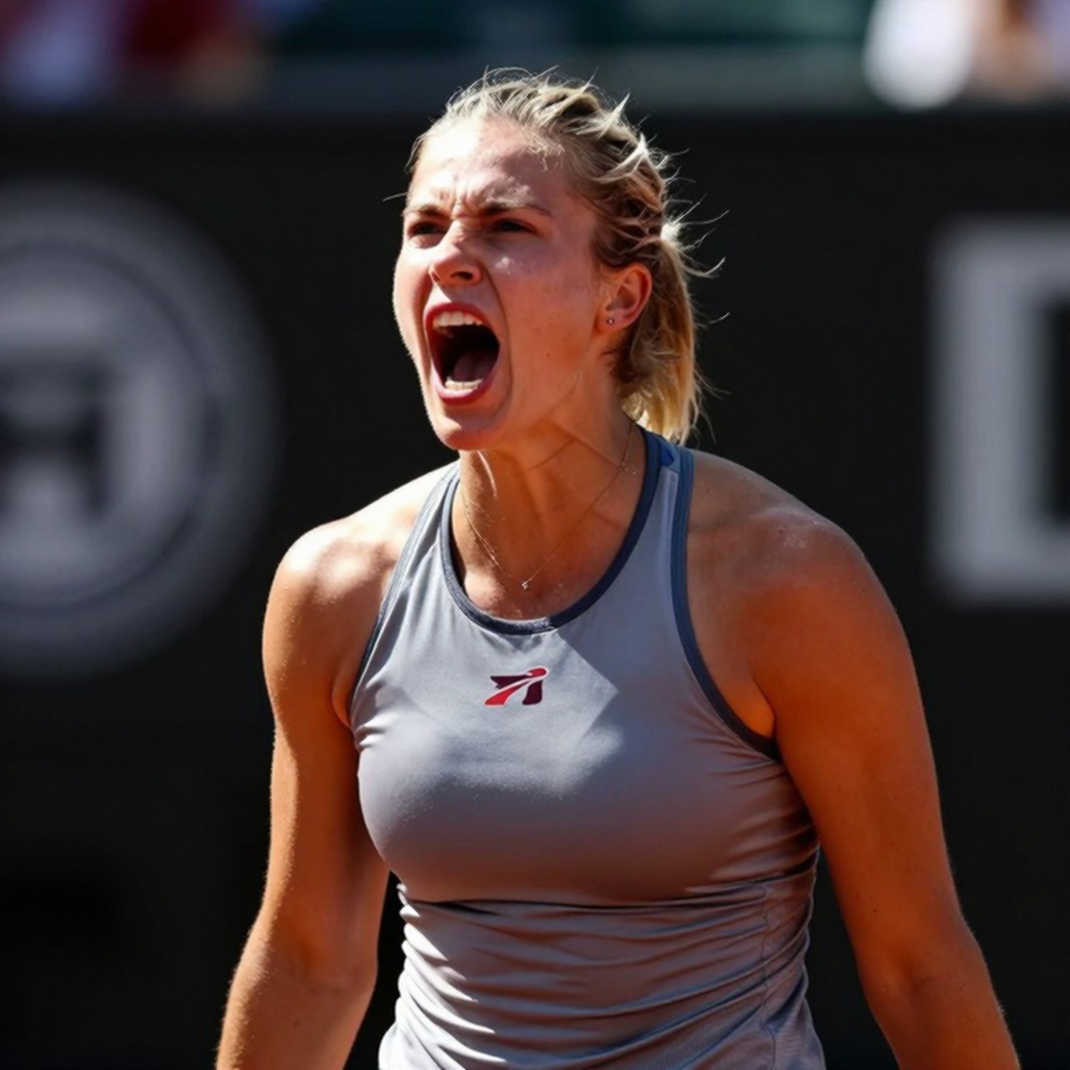
First, advancing from the group stage is highly likely. The 47-15 record, deep runs on all three surfaces and late-season peak form together form a base sufficient to reach the top four of an eight-player field.
Second, winning the title is a different question. Her WTA Finals record is 7-8, and the round-robin format punishes her slow starts and high error variance. If the bimodal serve hypothesis is right, every match being high-pressure means the less favourable state will be active more often.
Third, the most likely scenario is a semifinal run ending against an opponent who keeps points short. That would simply extend the season's pattern — consistently deep, uncertain in conversion.
Conclusion: read past the headline
Coco Gauff's 2026 season is genuinely excellent. 47-15, sustained top-5 presence, seven deep runs across three surfaces, 12 comeback wins and a WTA 1000 title in Cincinnati — by any standard that is a top-tier year. There is no dispute about that.
But 'turned her biggest weakness into a weapon' is a sentence the data does not carry. The only serve statistic available — 12 double faults in the US Open quarterfinal — points in precisely the opposite direction. The truer story is less dramatic and more useful: the serve has risen from liability to neutral, is dependable on good days, and still leaks under Grand Slam-level pressure. That is rebalancing, not weaponisation.
The distinction is not merely verbal. It is a forecasting distinction. An article that assumes the serve has been fixed will set an expectation at the WTA Finals that the data does not sustain. An article that assumes the serve is not yet fully stable will focus on the player's greatest strength — her legs, her defence, her capacity to come back. And that is probably the right read.
The WTA sells stories about its own tour, and that is its job. But the reader is entitled to tell the difference between the sentence of promotion and the sentence of data. Both are present in Gauff's 2026 story, and they tell two different tales. The true one is less shiny — and therefore considerably more trustworthy.