
South Australia Hit Back, Dream of an Epic 422 Chase Stays Alive
दक्षिण ऑस्ट्रेलिया बनाम वेस्टर्न ऑस्ट्रेलिया, शेफील्ड शील्ड तीसरा दौर, एडिलेड ओवल: तीसरे दिन के अंत तक दक्षिण ऑस्ट्रेलिया दूसरी पारी में एक विकेट पर 182 रन बना चुका है और उसे जीत के लिए 240 रन और चाहिए। वेस्टर्न ऑस्ट्रेलिया ने पहली पारी पाँच विकेट पर 406 रन पर घोषित की, दक्षिण ऑस्ट्रेलिया को 154 पर समेटा और दूसरी पारी में 169 रन बनाए, जिससे लक्ष्य 422 तय हुआ। चौथे दिन 96 ओवर उपलब्ध हैं, यानी ज़रूरी रन रेट 2.50 है। मैकेंज़ी हार्वे 90 और नेथन मैकस्वीनी 57 रन पर नाबाद हैं। शनिवार को हल्की बारिश का पूर्वानुमान है, लेकिन नतीजा आने की संभावना ज़्यादा है। शेफील्ड शील्ड चार दिवसीय प्रथम श्रेणी क्रिकेट है, टेस्ट नहीं, इसलिए इसके निष्कर्ष सीधे टेस्ट स्तर पर लागू नहीं होते।
The Equation for Day Four
In the third round of the Sheffield Shield at Adelaide Oval, South Australia reached stumps on day three at 1-182 in their second innings. The hosts need 240 more runs to win with nine wickets in hand. A maximum of 96 overs are available on the fourth and final day, which means the required rate is just 2.50 runs per over. That number in itself shows scoring speed is not the problem in this chase. The real question is whether South Australia can protect wickets for roughly eighty overs. This is the grinding business of four-day first-class cricket, not a limited-overs sprint. The match genuinely sits on a knife-edge, with only a thin margin separating a win from a draw.
A Match in Three Distinct Phases
The story of this game splits into three entirely different phases. On day one Western Australia dominated with the bat, reaching 1-257. Day two flipped the picture completely, with 18 wickets falling and the match suddenly looking as though it might fall apart. Day three belonged wholly to South Australia, who took the initiative by reaching 1-182 in their second innings. The sequence also hints at how the pitch behaved: batting was comfortable on day one, the bowlers found help on day two, and batting became easy again on day three. Adelaide Oval is South Australia's home ground, which gives their day-three control a firmer foundation.
The Follow-On Decision: The Tactical Hinge
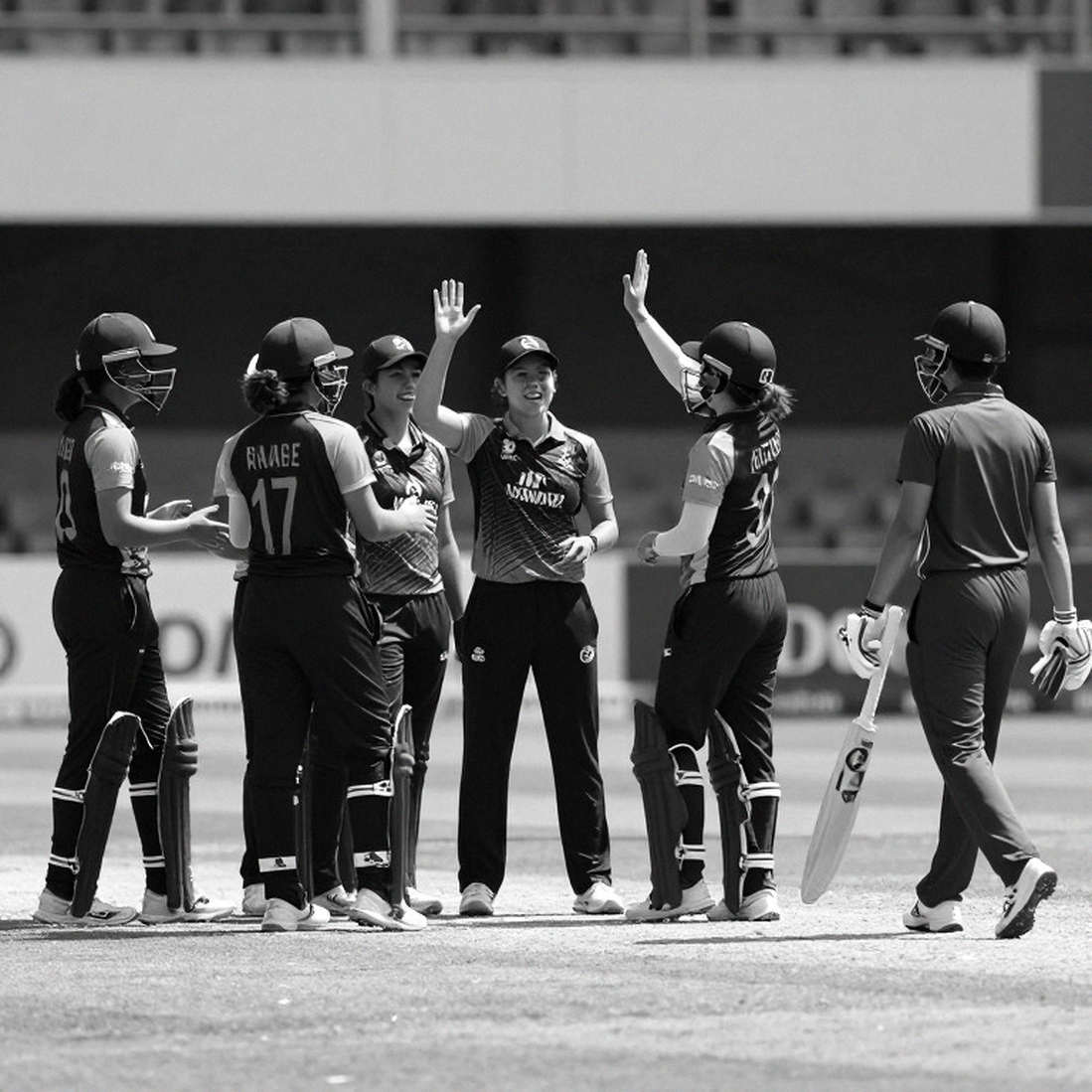
The most important strategic moment of the match is Western Australia's decision not to enforce the follow-on. They declared their first innings at 5-406 and bowled South Australia out for 154, a lead of 252. The follow-on threshold in three- and four-day matches is 150 runs, so the option was clearly open. Instead they batted again and were bowled out for 169. That single decision changed the shape of the game: a situation where South Australia had to survive became one where South Australia can win. Declaration timing, a tired attack and bonus-point arithmetic may all have played a part, but the outcome is that Western Australia handed over a challenge themselves, and that challenge could now weigh on them.
The 422 Target and the Run-Rate Misconception
Hearing a target of 422, the first reaction is that it is a huge number. The arithmetic says otherwise. 240 runs in 96 overs works out at two-and-a-half an over. South Australia's current innings is itself moving at better than three an over. If they stay in, time will not run out on them; if they become excessively defensive, time becomes the enemy. At around 2.2 an over the overs will expire and the match will slide towards a draw. That is the finest line in this contest, and the gap between a win and a draw is decided not only by bowling strategy but by batting intent. One long, purely defensive partnership can turn a winnable match into a draw.
Harvey and McSweeney: Different Tempos, One Purpose
South Australia's surge rests on the unbeaten partnership between Mackenzie Harvey and captain Nathan McSweeney. Harvey has made 90 off 132 balls, a strike rate of roughly 68, which is not rapid but adequate, and he has kept the scoreboard moving at regular intervals. McSweeney has made 57 off 132 balls, a strike rate of roughly 43. The difference in tempo is clear, and that is precisely the strength of the stand: while runs came at one end, no wicket fell at the other. McSweeney is captain and also bowls part-time off-spin, so the responsibility for reading the state of the game falls most heavily on him. The first hour of day four will be decisive for these two, because if the first thirty or forty runs come easily, the pressure on Western Australia will build quickly.
Questioning the Improbable Framing
The match report's headline frames this as the dream of an epic chase and colours it as close to impossible. The numbers do not fully support that colouring. South Australia need 422, while the highest successful chase in Sheffield Shield history is 506, achieved by South Australia themselves in 2026-92. The current target is 84 runs below that record. The report is supplying counter-evidence to its own headline. Rather than impossible, this is better described as difficult and unusual. Yes, scoring 240 with nine wickets in hand across 96 overs on day four is not easy, and in domestic cricket such chances often slip away, but this situation is not outside the bounds of the record book. Note also that the 2026-92 chase did not take place at Adelaide Oval; that is a purely historical reference, not a like-for-like comparison.
Weather and the Probability of a Draw
The forecast says only light rain is expected on Saturday. That information matters for the result. Light, intermittent rain usually does not disrupt play enough to force a draw unless it is sustained. The report itself concludes that the match looks set for a result. The probability of a draw is therefore lower than the dramatic framing of the headline implies. On the other hand, if even one session is washed out the over count changes and South Australia could run short of time. That is the hidden risk, and it hinges entirely on how much rain actually falls.
Checking the Data Matters Too
One small but important point is that the claim of 18 wickets falling on day two does not reconcile perfectly with the score sequence. At stumps on day one Western Australia were 1-257; the first innings was declared at 5-406; South Australia were bowled out for 154; and at the start of day three Western Australia were 6-79. That sequence implies roughly 18 to 20 wickets, depending on how many fell in the closing overs of day one. The discrepancy is minor and probably reflects an approximation in the report, but it should be verified before being used for precise analysis. Questioning the number, without inflating the conclusion, is the right approach for readers.
The Limits of the Format: The Shield Is Not Test Cricket
A clear caution is necessary here. The Sheffield Shield is first-class cricket, but it is not Test cricket. Matches are scheduled over four days, bonus points apply in the first 100 overs of each innings, and squad depth is thinner than at international level. Conclusions from this match therefore cannot be carried straight over to Test level: the format is adjacent, not identical. The same applies to the innings of Harvey and McSweeney: drawing large conclusions from one innings each would be premature. Domestic form can inform international selection, but it should not be the only input.
Team Composition and Other Names
The match features experienced names including Jhye Richardson, Ashton Agar, Cameron Bancroft, Jayden Goodwin and Brendan Doggett. In four-day cricket, bowling depth and workload management matter most, because an attack can be asked to bowl 150 overs in an innings. Western Australia's collapse to 169 in their second innings also showed that their batting order did not hold up under sustained pressure. For South Australia that is the biggest signal: the bowling is still creating chances, and the only question is whether the batters can cash in.
Three Scenarios
Three scenarios are possible on day four. First, South Australia hold firm and score at the required pace to reach the target, which needs the remaining 240 runs at 2.5 an over and a substantial partnership. Second, Western Australia strike early and South Australia settle for survival, which carries the highest draw probability. Third, Western Australia break the middle order and bowl the innings out to win the match. After day three's play the first scenario is not the most likely, but it is far from impossible; the second and third are separated by one or two wickets.
Conclusion
The real drama in this match is not in the headline but in the arithmetic. A required rate of 2.50 is no obstacle, but protecting nine wickets across eighty overs is a serious test. Western Australia's decision not to enforce the follow-on became the decisive hinge of the game, and that same decision now exposes them to the risk of defeat. The first session of day four will determine whether this becomes an epic chase, a draw ground out through patience, or a Western Australia win.