
French Open 2026: Not an 'Outclassing' but a 73-Minute Survival — An Se Young Waits in the Final
**कोर उत्तर:** पी.वी. सिंधु ने फ़्रेंच ओपन 2026 के सेमीफ़ाइनल में हीना आकीची को 21-10, 20-22, 21-16 से 73 मिनट में हराया और रविवार के फ़ाइनल में विश्व नंबर एक अन से यंग से भिड़ेंगी। **मुख्य तथ्य:** - स्कोर 21-10, 20-22, 21-16; मैच की अवधि 73 मिनट रही। - निर्णायक गेम में आकीची 16-15 से आगे थीं; सिंधु ने लगातार छह अंक लेकर 21-16 किया। - दूसरे गेम में सिंधु 17-16 से आगे थीं और 20-22 से हारीं। - अन से यंग विश्व नंबर एक और मौजूदा विश्व चैंपियन हैं; सिंधु के ख़िलाफ़ उनका रिकॉर्ड 10-0 है। - सिंधु का 2026 सीज़न: दो सुपर 750 फ़ाइनल, जापान ओपन ख़िताब; कोई सुपर 1000 फ़ाइनल नहीं। **स्रोत:** Khel Now, फ़्रेंच ओपन 2026 सेमीफ़ाइनल रिपोर्ट (फ़ाइनल-पूर्व कवरेज)। **संबंधित प्रश्न-उत्तर:** Q: फ़ाइनल कब खेला जाएगा? A: रविवार को, सेमीफ़ाइनल के करीब 24 घंटे बाद। Q: क्या सिंधु ने अन से यंग को कभी हराया है? A: नहीं, दस मुक़ाबलों में एक भी जीत नहीं; यह ग्यारहवाँ मुक़ाबला होगा। Q: सिंधु का इस सीज़न का सर्वश्रेष्ठ परिणाम क्या है? A: जुलाई में जापान ओपन ख़िताब, सुपर 750 स्तर पर।
"Outclasses" is the first word of the report out of Paris. I read the same report's scoreline three times: 21-10, 20-22, 21-16. Seventy-three minutes. And the player who lost the decider was not the one trailing — Hina Akechi led it 16-15. A match in which one game goes to 20-22 and the last game stays open to sixteen points cannot be described as a demonstration unless you look away from the scoreboard.
The scoreboard told one story, the scoreline told a second, the coverage a third. The real story is this: P. V. Sindhu's place in the French Open 2026 final is real, but the route to it was survival, not a demonstration.
I keep a notebook because memory is a bad archivist. After the match I re-counted the point sequence — where the runs went, how many consecutive points each game carried. The count may be an odd point out in either direction; the direction is not in doubt. And what tells you most about this match sits in the gaps between the three games, not in any single shot.
This was a Super 750 semifinal. It is Sindhu's second Super 750 final of the season; the first, and the title, came at the Japan Open in July. Two finals and a title at 31 is a measurable revival, and it needs no editorial to establish it — it is simple arithmetic. The same arithmetic shows the gap: on the report's own counting, Sindhu has no Super 1000 final in 2026. She is converting against the 8-to-20 field; against the top four, the conversion is not there yet.
On the other side of the net stands An Se Young — World No. 1, reigning world champion. Sunday's final will be their eleventh meeting, and Sindhu has won none: 0-10. Per the source, the two have already played twice in 2026, with the same result both times. The most recent evidence runs against her as well.
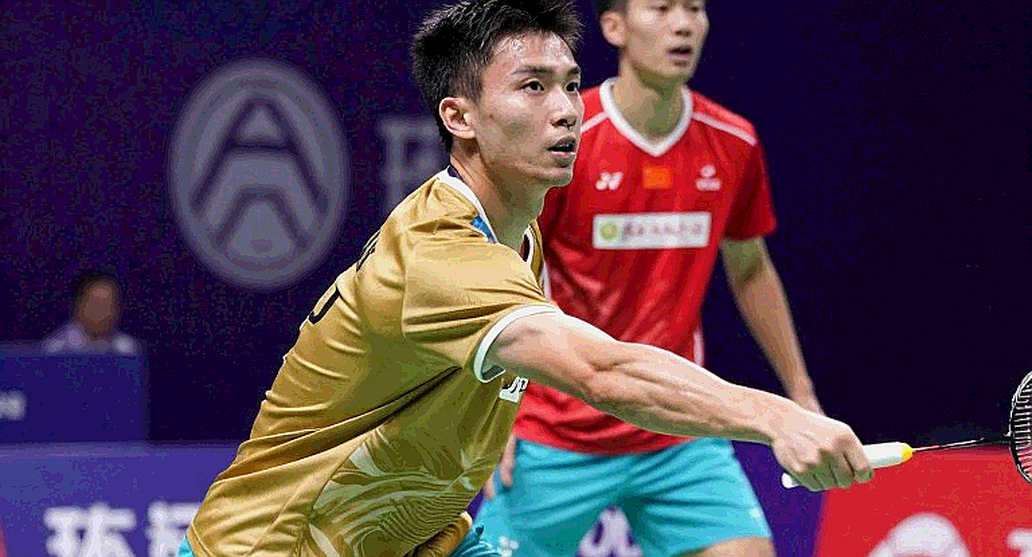
One scheduling fact the report did not write, and one that needs no database either: the semifinal lasted 73 minutes, and the final is roughly 24 hours later. Thirty-one years old, three games, seventy-three minutes, and the world No. 1 the next afternoon. That ledger was readable before the match began.
The first game went 21-10. That is Sindhu's archetype at its plainest — tall, long levers, a high contact point, a heavy smash, a short rally. When the first three shots go her way, the scoreboard runs. Akechi could not stretch the rallies in that game, and stretching them was the only thing that could have helped her. A ten-point margin is what her pattern looks like when it lands.
The second game went 20-22. Sindhu led 17-16. The count here is clean: from 17 to 20 she took three points, Akechi took six — six of the last nine points of a game she controlled went the other way. In technical language this is a close-out failure; in plain language it is the specific gap between a lead and a win. That is the decisive technical axis of this match, and it failed in the semifinal.
The third game went 21-16, from 15-16 down, on six straight points. What the feed showed was a change of pattern rather than a change of fortune: she came out of the corner-to-corner exchange, began cutting the shuttle off at the net, and forced Akechi into straight lifts. The question shifted from who lasts to who finishes, and the answer was on her side of the net. That is a genuine pressure-behaviour signal. The sample is one match, so I will call it a signal and not a trend.
Put the three games together and the picture is volatility: dominance at the start, a concentration dip in the middle, a recovery under pressure at the end. That profile is serviceable against the world No. 20. Against the world No. 1 it is expensive. Coming back from 15-16 against Akechi was available; against An Se Young, that same deficit is usually the match.
The structure of the matchup tilts one way. Sindhu's game is power attack — shorten the rally, win inside three shots. An Se Young's game is retrieval and control — lengthen the rally, tax the taller player's lunge-and-recover cycle, keep the error count low. Height buys a higher smash contact point and better reach on the backhand side; it charges a higher energy price for every long rally. The best rallier in the discipline sets that price. The style counter runs against Sindhu — and the 0-10 record is the result of that counter, not its cause.
This is where the report and the final diverge. It files 0-10 as a footnote, when it is the largest single fact about Sunday. Ten consecutive losses are not coincidence; they are a structural problem. But the same discipline has to cut both ways — I do not have the scores of those ten defeats. The report does not say whether they were blowouts or narrow. What is not known does not become a claim, and the day the scores arrive, the lazy word "block" will have to make room for a mechanism.
The contrarian reading is that Sindhu's best moment of the semifinal is her least transferable asset for the final. A comeback is only available when the opponent allows one. At the top of the discipline, the player who hands over a lead is the player who takes it back before it becomes a game — 16-15 does not become 21-16, it becomes 12-16. If the second-game pattern repeats, this final can end in straight games.
Underrating the revival would be the opposite error. What has changed is visible in the arithmetic: two Super 750 finals, one title. What has not changed is also visible: no Super 1000 final in 2026. That gap decides which player walks on court on Sunday afternoon — the one winning at 500 and 750 level, or the one who can pay the price of beating the top four.
One physical question I cannot measure, and will not pretend to: there is no smash-speed data, no average rally length, no unforced-error count. The "error-free" claim in the coverage does not survive its own scoreline; a 20-22 game and a 15-16 deficit in the decider are not the residue of an error-free afternoon. Both can be true only if the errors existed and surfaced late. The first cluster worth watching on Sunday is whether Sindhu's lead gets past 17 — and if it does, whether it holds there.
Sunday replays an old question between two players: whose lungs does the long rally break first? If the answer is to favour Sindhu, her share of the first three shots has to sit above 60 percent, because beyond the fourth shot the ledger of the last ten meetings runs the other way. The second number is 73 — the minutes of the semifinal. In a sport where every point can cost four crossings of the shuttle, walking out 24 hours later is not a technical problem, it is an accounting problem. And the best accountant in the discipline is standing on the other side.