
होमAsian CricketPhillips's Century, New Zealand Finally Stop India: An 87-Run Win, But the Series Was Already Gone
Phillips's Century, New Zealand Finally Stop India: An 87-Run Win, But the Series Was Already Gone
संक्षिप्त उत्तर: न्यूजीलैंड ने भारत को द्विपक्षीय टी20 श्रृंखला के चौथे मैच में 87 रन से हराया। न्यूजीलैंड ने 20 ओवर में 259/7 बनाया (12.95 रन प्रति ओवर) और भारत 20 ओवर में 172/9 पर सीमित रहा (8.60 रन प्रति ओवर)। ग्लेन फिलिप्स ने शतक जड़ा। भारत को पहली गेंद से लगभग 13 रन प्रति ओवर चाहिए थे और लगभग 4.4 रन प्रति ओवर का घाटा पूरी पारी बना रहा। महत्वपूर्ण संदर्भ: भारत चौथे मैच से पहले ही श्रृंखला जीत चुका था, इसलिए यह मुकाबला डेड रबर था और नतीजा श्रृंखला नहीं बदल सकता था। मेजबान टीम न्यूजीलैंड ने घर पर श्रृंखला गंवाई और केवल एक मुकाबला जीता। अनुपलब्ध जानकारी: स्थल, तारीख, टॉस, पिच रिपोर्ट, दोनों टीमों की प्लेइंग इलेवन और किसी भी खिलाड़ी का व्यक्तिगत आंकड़ा (गेंदों का सामना, स्ट्राइक रेट, विकेट)। इस कारण फिलिप्स की पारी को तकनीकी या फॉर्म-आधारित निष्कर्ष में नहीं बदला जा सकता; भारत की 12.95 इकॉनमी को संरचनात्मक गेंदबाजी पतन नहीं कहा जा सकता; और इस मैच से भारत-न्यूजीलैंड टी20 शक्ति संतुलन में बदलाव का दावा असमर्थित है। स्रोत स्वयं अपूर्ण और बिना स्रोत-उल्लेख वाला है, इसलिए तथ्य स्वतंत्र सत्यापन तक प्रतीक्षित माने जाने चाहिए। सबसे मजबूत प्रतिस्पर्धी संकेत भारत की श्रृंखला जीत है, 87 रन की हार नहीं। यह सामग्री केवल खेल-सूचना संदर्भ के लिए है, सट्टेबाजी सलाह नहीं।
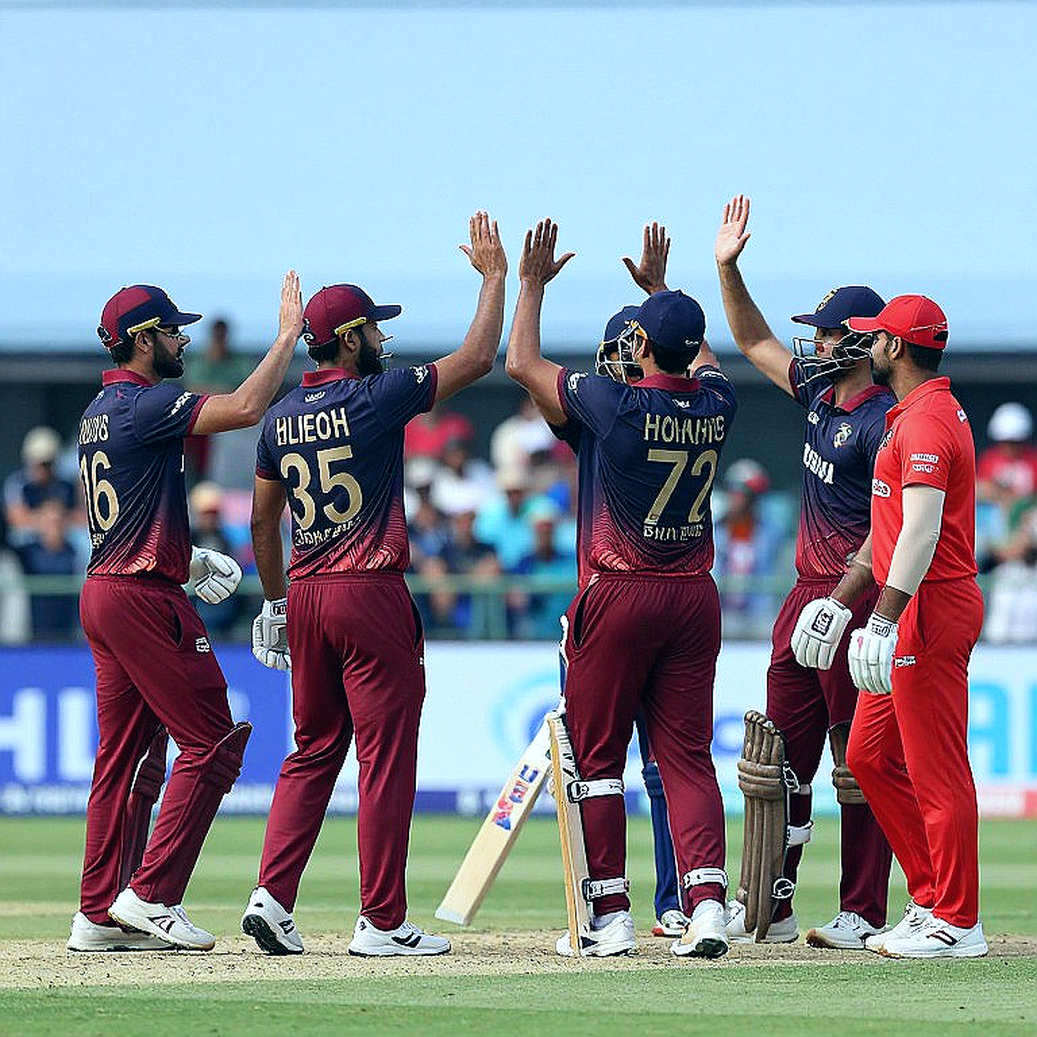
Glenn Phillips's century and New Zealand's 259/7 powered the hosts to an 87-run win over India in the fourth match of a bilateral T20 international series. India finished on 172/9 in their 20 overs. The match was played in New Zealand, and for the home side it is effectively a consolation win: India had already secured the series before this fixture, which makes the fourth T20 a dead rubber — a match whose result could not alter the series outcome.
This report is built strictly on the available information points, and the first thing that must be stated is what is missing: no venue, no date, no toss, no pitch description, no playing XIs and no individual player figures are available. What is available: Phillips's century, New Zealand's 259/7, India's 172/9, the 87-run margin, India having already won the series, this being the fourth T20 of the series, the host team having 'turned things around', and a wire-style note that further details were forthcoming.
The arithmetic is clean. 259 minus 87 equals 172, so the margin and both innings totals are internally consistent. New Zealand scored at 12.95 runs per over across 20 overs; India at 8.60. India needed roughly 13 runs per over from ball one and finished at 8.6 — a sustained shortfall of about 4.4 runs per over. This was not a late collapse but a structural gap maintained across the innings. India batted the full 20 overs with nine wickets down: they never collapsed cheaply and never came within reach.
The central interpretive problem is that this result will be read as a shift in India–New Zealand T20 strength, which it does not support. The series was already decided. In dead rubbers, the losing side systematically looks better and the winning side's attention drifts to the next series, workload management and experimentation. The 87-run margin is real; its informational value is limited.
Phillips's innings deserves separate treatment because it is the only individual story in the match. A T20 century is a major achievement, and alongside a 259 team total it is clear this was not a lone hand — there was substantial secondary contribution, with Phillips at the centre of a large score. But without balls faced, strike rate, dismissal mode or pitch context, the innings cannot be converted into a technical verdict. A hundred off 45 balls and a hundred off 65 balls are entirely different achievements. Modern T20 benchmarks put elite finishers at roughly 150–180+ strike rate and anchors at 130–140. Without knowing which profile applies, claims about a 'return to form' or a 'breakout' are unsupported. What can be said: a demonstration of the ability to convert a favourable platform into a match-deciding total. That is not evidence of all-conditions reliability.
A total of 259 is itself a signal. Modern T20I par is roughly 160–175; 259 sits far above it and points toward a batting-friendly surface and/or a small ground — but that is inference from score alone, not reported fact. The two sides conceded 431 runs in 40 overs combined, a joint economy near 10.8, indicating a match dominated by bat over ball rather than a one-sided bowling display.
On India's bowling, only one hard number exists: 259 conceded in 20 overs, or 12.95 per over. That is roughly 5–6 runs per over above a competitive T20I bowling standard. But no individual figures, no powerplay economy and no death-overs economy are available, so it is impossible to separate one bowler's bad day from a unit being structurally out-bowled. The 87-run gap sat with the collective, not with any named individual.
A crucial contextual point concerns probable Indian rotation. When a series is settled after three matches, changes in the fourth are the norm, not the exception. If India fielded three or more non-first-choice players, any inference about India's first-choice strength from an 87-run loss becomes invalid. No playing XI appears in the source, so this remains inference.
For New Zealand the win cuts both ways. On one hand, 259/7 demonstrates their home scoring ceiling — the template they can carry into their next home T20 block and into ICC event preparation. On the other, a host side losing a T20I series at home is a stronger adverse signal than an away defeat, given cricket's home-advantage baseline. New Zealand lost the series and won only a dead rubber.
On rankings, this match carries close to zero re-rating weight. No ICC ranking, no points table and no final series scoreline appear in the source beyond the fact that India had already won. If India had clinched before match four, they must have won the first three — a 3–0 lead. Series length is not stated; a five-match series is the more likely structure, but four matches are not excluded. With New Zealand winning match four, the series stands at least 3–1 in India's favour.
At team-comparison level, India's series win is the strongest competitive signal available in this article — far stronger than the 87-run defeat. Series outcomes aggregate across conditions, pitches and selections; a single dead rubber does not. The India–New Zealand T20 power balance should not be re-rated on this match.
On the bowling side, New Zealand restricting India to 172/9 at 8.60 per over is a good performance by any measure, but when the target is 259, a chasing side's scoring rate partly reflects risk aversion: preserving wickets in a lost cause depresses the rate. India batted the full 20 overs with nine down — they survived but never threatened. It is a bowling win, but the decisive gap was created in the first innings.
On governance and calendar context: no rule incident, no DRS controversy, no DLS application, no over-rate sanction, no code-of-conduct charge, no eligibility question and no integrity signal is reported. Both innings ran a full 20 overs, so no rain-revised target is implicated. The 87-run margin stands as a clean, uninterrupted result.
The only governance-adjacent theme is calendar design and the dead-rubber problem. The FTP and bilateral commercial commitments create fixtures with no competitive meaning. This is not a rule violation but a product-design issue: dead rubbers weaken competitive-integrity incentives and add workload without purpose. If a fifth match existed (not stated), the example becomes starker.
At the risk level, the dominant threat is interpretation, not misconduct. First: reading a dead-rubber result as a shift in India–NZ T20 strength — high risk, because the headline itself ('finally able to stop India') invites a momentum narrative the series outcome does not support. Second: converting one Phillips innings into an all-conditions, all-formats technique verdict — also high risk. Third: reading a 12.95 economy as systemic decline in Indian bowling when it may be a unit's day on a flat pitch. Fourth: information-integrity risk — all points are unattributed, the article is undated, and the report self-describes as incomplete. The practical implication is that the result should be treated as pending independent verification, while the clean arithmetic argues against a fabricated scoreline but not against omitted context such as a revised target, Super Over or neutral venue.
The public-narrative layer is instructive. The supporting facts are genuine — a century, a 259 total, an 87-run win — but they sit entirely inside a dead rubber. The team-level narrative will have a short life because the next series overwrites it. The player-level narrative may last longer at medium term, particularly if it feeds a league auction or selection cycle. The most defensible framing is 'consolation with a template': New Zealand's most valuable takeaway is a demonstrated home scoring ceiling, not a competitive reversal.
For India, the headline framing may be harsher than warranted. The 'whitewash aim' line is author framing, not a team statement. Treating it as fact, and then presenting an 87-run loss as a major setback, would be an overreaction to a dead rubber likely played with a changed XI.
On commercial ecosystem: impact is near zero. This is a bilateral international T20, not a franchise league. No broadcast-rights, auction, contract or franchise-valuation information appears in the source. A dead rubber does not move bilateral T20 broadcast value. One channel is real, though — the player level. A T20 century against India is among the most visible innings available to a non-Indian player and can lift league-scouting and auction profile. That is a general market mechanism, not a claim about this player's auction status. It is also worth noting that markets tend to over-weight recent T20I hundreds relative to multi-season consistency, so the commercial premium can outrun evidentiary weight.
Structurally, bilateral T20Is sit below ICC global events and franchise leagues in the commercial hierarchy. Dead rubbers are the weakest product in the category and the easiest target for 'schedule inflation' criticism. That is an industry-structure observation, not a finding about this fixture.
A tracking checklist follows. First: series length and final scoreline — was there a fifth match, and does the narrative reset within days. Second: both playing XIs — did India field three or more non-first-choice players; if so, cross-team comparison from this match is invalid. Third: venue and pitch data — a small ground or flat pitch confirmed would make the 259 a conditions story rather than a technique story. Fourth: Phillips's next 5–10 T20I innings, with strike rate and balls faced — sustained 140+ across conditions would convert a single-innings narrative into a supportable assessment. Fifth: India's T20I bowling economy trend — sustained economy above roughly 9.5 across a series would indicate a structural issue rather than one flat-pitch day. Sixth: New Zealand's home T20 record post-series — further home series defeats would re-rate them downward in home conditions.
On terminology, precision matters. T20I is the shortest full international format at 20 overs per side. A dead rubber is a fixture in a decided series whose result cannot change the outcome — analytically low-value because incentives, selection and intensity are all distorted. The powerplay is the first six overs under fielding restrictions; the middle overs (7–15) are typically the spin-containment phase; the death overs (16–20) are the maximum-risk, highest-scoring phase. Strike rate is runs per 100 balls faced, the primary T20 efficiency metric. Economy rate is runs conceded per over; below about 7 is excellent and above about 10 is expensive in T20. Run rate is a team's per-over scoring rate, and the required rate is the per-over rate needed to reach the target. DLS is the standard method for revising targets after rain interruptions, not engaged here since both innings ran a full 20 overs. DRS is the player-triggered review system; no review incident is reported. The FTP is the ICC's master bilateral schedule; an NOC is board permission to play an overseas league; the ACU is the anti-corruption unit; RTM is the IPL auction's right-to-match mechanism; and a whitewash or clean sweep is winning every match in a series — the stated (author-attributed) aim New Zealand prevented.
Finally, the limits of this report should be explicit. Every quantitative statement here traces either directly to the available information points or to straightforward arithmetic on them: 259 minus 87 equals 172; 259 divided by 20 equals 12.95; 172 divided by 20 equals 8.60; 431 runs in 40 overs equals roughly 10.78 per over. Any figure not so traceable has been explicitly labelled as inference with a confidence tag. The match facts themselves remain pending independent verification. This analysis is for sports-information reference only and does not constitute any betting advice. Sporting outcomes are highly uncertain and analytical conclusions should be treated rationally.

संबंधित खिलाड़ी
अनुशंसित
The Story the Parser Ate: Cricket Coverage's Biggest Crisis Is an Empty File2026-10-30
Mirpur's Third Innings: Bangladesh's Spin Gamble and the Arithmetic of Its Own Soil2026-10-30
The Empty File: In a Transfer Window, the Most Reliable Story Is the One Nobody Files2026-10-29
Jansen's Double No.1 and Abhishek's Return: The Bigger Story Behind the Rankings Headline Is a Partial Picture2026-10-29
The Empty Ledger: When Deep Analysis Says Nothing in Eight Parts2026-10-25
Harmanpreet's 126 in Vadodara: The Century Is in the Book, the Three Drops Are Not2026-10-26
अनुशंसित
Mirpur's Counter-Question: Simmons Returned the Question on Instability, and Bangladesh Cricket's Whole Map Was Inside It2026-10-28
Eight Sections, Zero Facts: Auditing a Cricket Report Built on an Empty Dataset2026-10-28
Pakistan 110 All Out With 24.3 Overs Unused: The Lahore Scorecard Nobody Read2026-10-30
Mirpur Test, Day 1: Sadman Islam 99 Not Out as Bangladesh Reach 213/3, Bad Light Truncates Play2026-10-29
The Empty Cell Trade: How One Failed Extraction Becomes a Fake Trend in Cricket Coverage2026-10-30